The problem
“What was actually wrong with it?”
The Customer Concern
In September 2026, the vehicle arrived by tow truck with a reported radiator problem. Inspection revealed extensive oil contamination in the coolant. The vehicle returned in November after the customer noticed oil in the coolant reservoir again.
How oil enters a cooling system · Illustration
A cooler keeps oil and coolant separate while transferring heat between them. When the internal barrier fails, oil passes into the coolant and circulates through the radiator, reservoir and hoses.
Visit 1 · September 2026
“How did they find the source?”
Finding the Initial Source
Our technicians inspected the cooling system and assessed possible sources of contamination. The engine oil cooler was checked and did not show a fault during the first inspection. The investigation identified failure of the transmission cooler associated with the radiator.
The coolant reservoir and cap were affected by the oily residue. The radiator was replaced, the reservoir cleaned, and the cooling system repeatedly flushed with a suitable oil-removing cleaner. Oil contamination remained after the first flush, requiring further cleaning.
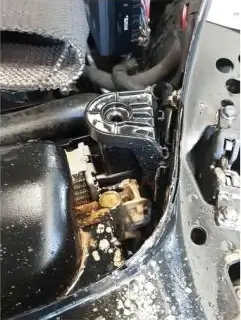
A cooler keeps oil and coolant separate while transferring heat between them. When the internal barrier fails, oil passes into the coolant and circulates through the radiator, reservoir and hoses.
After the work, the cooling system was operating as designed at that time. We explained that residual contamination could reappear and recommended a return inspection and final flush within 1,000 km or two weeks, whichever occurred first.
Visit 2 · November 2026 · 973 km later
Reassessing the Recurring Contamination
The SLK350 returned in November, approximately 973 km after the first visit. Inspection confirmed engine oil was present in the coolant reservoir. This time, further diagnosis identified an engine oil cooler fault, and replacement of the engine oil cooler and further cleaning of the cooling system were undertaken.
During the same visit, a complimentary electronic fault scan recorded a current or stored thermostat circuit fault and secondary-air system faults on both engine banks. The workshop assessed these findings separately from the coolant contamination.
A cooler keeps oil and coolant separate while transferring heat between them. When the internal barrier fails, oil passes into the coolant and circulates through the radiator, reservoir and hoses.
After the work, the cooling system was operating as designed at that time. We explained that residual contamination could reappear and recommended a return inspection and final flush within 1,000 km or two weeks, whichever occurred first.